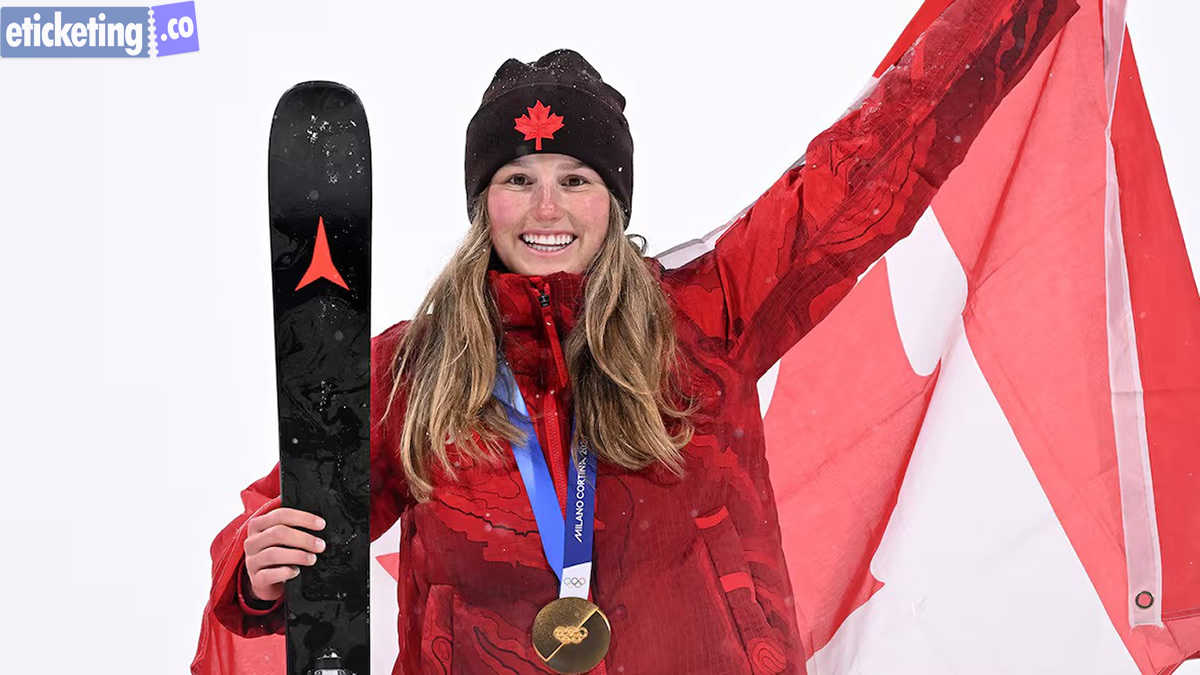
Megan Oldham After Olympic Big Air Gold: I Wanted to Prove It to Myself
When Megan Oldham dropped into the Olympic Big Air final, the moment carried the weight of expectation, history, and personal ambition. The crowd saw a medal contender. Canada saw a potential champion. But for Oldham, the biggest challenge wasn’t external — it was internal. In the high-stakes world of Winter Olympic freestyle skiing, every jump is a test of skill, precision, and mental strength.
Olympic 2026 fans worldwide can book Olympic Freestyle skiing Tickets from our online platforms eticketing.co Fans can book Olympic Tickets on our website at discounted prices. Experience the thrill of the Games in Milano Cortina and support your favorite athletes as they compete for glory.
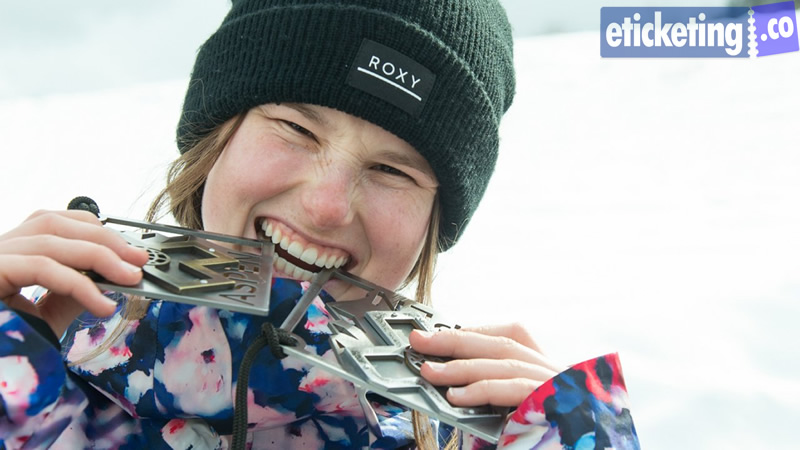
I wanted to prove it to myself, she said afterward, her voice calm but reflective. Not to anyone else. Just to myself.” That quiet determination defined her Olympic performance in Winter Olympic freestyle skiing. It wasn’t about silencing critics or chasing validation from the outside world. It was about confirming what she had always believed she was capable of — executing under pressure, trusting her training, and delivering when it mattered most.
Freestyle Skiing: The Thrill of Big Air
Big Air is one of Winter Olympic freestyle skiing most explosive disciplines. In a matter of seconds, athletes launch themselves off a towering jump, twisting and flipping high above the snow before landing on a steep pitch below. There are no second chances midair. Once you leave the lip, commitment is everything.
For Oldham, Big Air has always been about creativity and progression. Known for her technical combinations and willingness to attempt difficult tricks, she built her reputation on pushing boundaries. But Olympic competition is different. The stage is larger. The stakes are higher. And the pressure can distort even the simplest movements.
What makes freestyle skiing unique is its balance between art and athleticism. Judges reward amplitude, difficulty, execution, and style. It’s not just about landing the trick — it’s about how you perform it. Oldham understood that nuance. Her gold-medal run was not only technically advanced; it was fluid, controlled, and confident. In those few seconds airborne, years of preparation condensed into instinct. You Can Read Winter Olympic 2026: Olympic Freestyle Skiing Jakara Anthony Has Mount Buller Mogul Course Named After Her
Overcoming Challenges on the Road to Olympic Gold
Oldham’s road to Olympic gold was not linear. Early success brought attention, and attention brought expectations. As a teenager breaking onto the World Cup scene, she quickly became one of Canada’s brightest prospects. Podiums followed. So did comparisons.
But elite sport has a way of testing resolve. Injuries interrupted her momentum. Inconsistency crept in during crucial events. The margins in Winter Olympic freestyle skiing are razor-thin; a slight under-rotation or a small hand drag can mean the difference between a podium and an early exit.
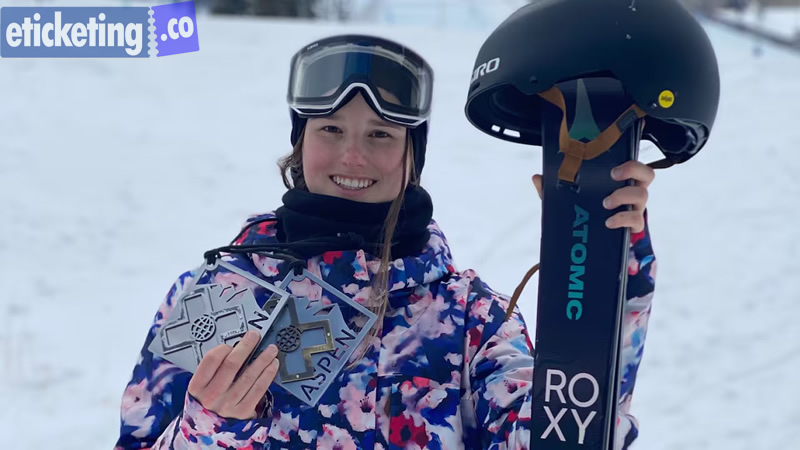
There were moments when doubt lingered. Not public doubt — that’s easier to address. Private doubt. The kind that whispers during rehab sessions or after missed landings in training. The kind that asks whether the next level is truly within reach.
Instead of retreating, Oldham recalibrated. She refined her technique, strengthened her mental preparation, and leaned into the process. Coaches often describe elite athletes as resilient, but resilience in Winter Olympic freestyle skiing is more than grit — it’s adaptability. Weather changes. Snow conditions shift. Judges interpret runs differently. Athletes must remain flexible without losing identity. Oldham learned that balance.
The Olympic Moment in Winter Olympic Freestyle Skiing
Olympic finals compress time. Hours of waiting culminate in brief windows of performance. Every competitor knows that medals are decided not just by skill, but by composure. Oldham’s first jump in the final set the tone — powerful takeoff, clean rotation, solid landing. It wasn’t reckless. It was calculated. She built momentum rather than chasing it.
By her second run, the stakes sharpened. Other athletes were raising the difficulty level, forcing strategic decisions. Should she match the risk? Should she stay conservative? Olympic gold often demands a blend of courage and control. She chose belief. Her final jump — the one that ultimately secured gold — was executed with precision. The amplitude was undeniable. The rotation crisp. The landing steady, skis absorbing impact with authority. As she skied away, there was no dramatic celebration at first. Just a look upward, a subtle exhale. In that exhale was relief. And realization.
Finding Self-Belief: The Key to Olympic Success
Athletes frequently speak about proving something to critics, doubters, or even entire nations. Oldham’s framing was different. Her motivation came from an internal benchmark — a standard she had set long before the Olympic spotlight.
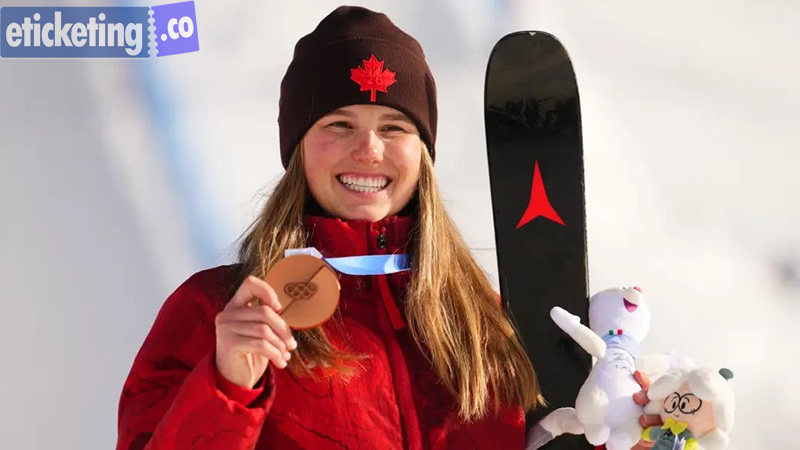
Proving it to herself meant trusting her preparation. It meant believing that setbacks were chapters, not conclusions. It meant acknowledging that talent alone is insufficient without consistency and mental strength.
Self-validation in elite sport is complex. External achievements are measurable — medals, rankings, points. Internal belief is not. Yet, without that belief, the measurable results rarely follow. Oldham’s gold medal represented alignment. Her skills matched her mindset. Her preparation matched the moment.
The Evolution of a Champion
Gold medals can redefine careers. They elevate athletes into national icons and shift expectations for future seasons. But for Oldham, the medal seemed less like a destination and more like confirmation.
Winter Olympic Freestyle skiing is constantly evolving. Tricks that were once groundbreaking become standard within a season or two. Progression never pauses. As a champion, Oldham now carries both opportunity and responsibility — to continue innovating while maintaining the fundamentals that earned her gold. Her approach suggests she understands that balance. Rather than resting on achievement, she has spoken about growth, about refining execution, about expanding her trick repertoire.Champions who endure are those who remain students of their sport.
Winter Olympic 2026: Canada’s Legacy and the Power of Self-Belief
Canada has long been a powerhouse in Winter Olympic freestyle skiing, producing Olympic medalists across disciplines. Oldham’s victory adds another chapter to that legacy, reinforcing the nation’s reputation for technical excellence and fearless creativity.
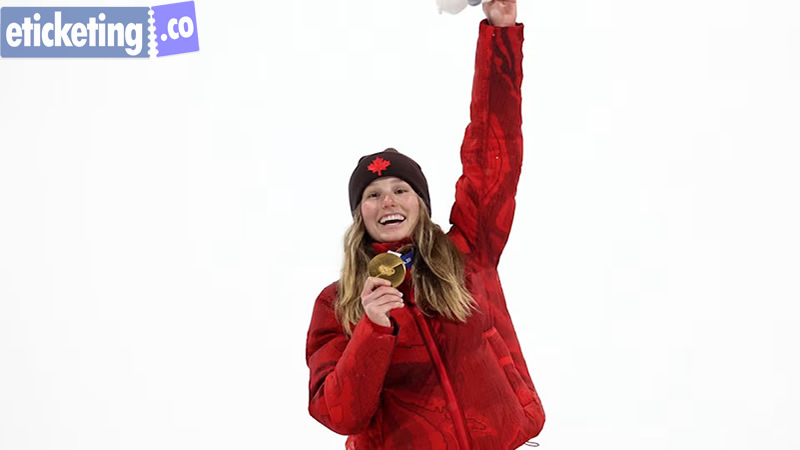
Olympic 2026 fans worldwide can book Winter Olympic Tickets from our online platforms eticketing.co Fans can book Olympic Tickets on our website at discounted prices. Experience the thrill of the Games in Milano Cortina and support your favorite athletes as they compete for glory.
Yet, her story resonates beyond geography. Young skiers watching her Olympic run saw possibility. They saw composure under pressure. They saw an athlete who admitted vulnerability while demonstrating strength. Representation in sport matters — not only in terms of nationality or gender, but in mindset. Oldham’s emphasis on self-proof sends a powerful message to aspiring athletes: success begins internally.
Mental Strength in the Spotlight
The psychological demands of Olympic sport often remain invisible. Cameras capture the jumps, the landings, the podium ceremonies. They do not capture early-morning doubt, late-night analysis, or the quiet recalibrations after disappointment.
Oldham’s journey highlights the importance of mental training in Winter Olympic freestyle skiing. Visualization, breathing techniques, and routine-building are as crucial as physical conditioning. Big Air requires athletes to commit fully to complex aerial maneuvers. Hesitation mid-rotation is not an option. Confidence must be cultivated deliberately. Her Olympic performance suggested an athlete who had mastered that mental terrain. She wasn’t performing for applause; she was executing a plan.
Embracing the Future in Freestyle Skiing
In the weeks following her victory, interviews focused on celebration and future goals. But beneath the surface, the gold medal carries deeper meaning. For Oldham, it closes one chapter while opening another. The question Can I do it? has been answered. Now comes a new question: How far can I go?
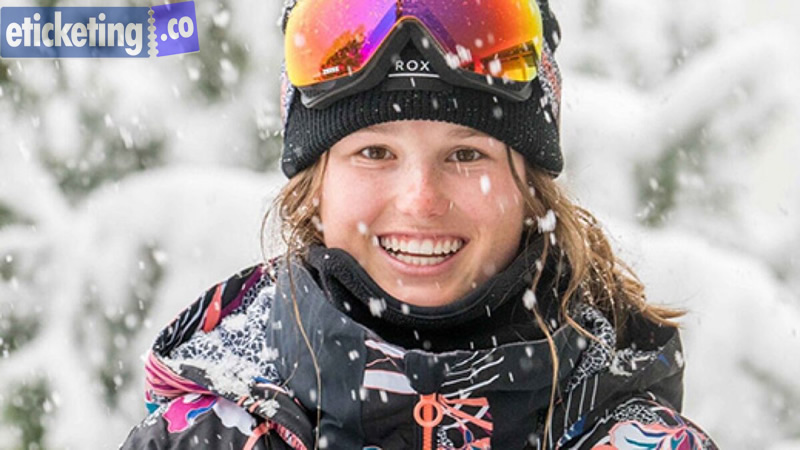
Winter Olympic Freestyle skiing thrives on progression. Each generation builds upon the last. With Olympic gold secured, Oldham stands at the forefront of that evolution. Whether through technical innovation or mentorship, her influence will extend beyond her own results. Most importantly, she has demonstrated that belief is not loud. It does not always manifest as bold proclamations. Sometimes, it is quiet and steady — a commitment to self-trust that persists through setbacks.
A Moment That Defines Winter Olympic Freestyle Skiing
Olympic memories often freeze in time: the takeoff, the rotation, the landing, the scoreboard confirming history. For fans, those images define the achievement. For athletes, the memory is more layered.
Oldham’s gold medal run will replay in highlight reels for years. But what will stay with her is likely more personal — the feeling at the top of the in-run, the internal calm before launch, the knowledge that she was ready. I wanted to prove it to myself. In doing so, she proved something larger that resilience, patience, and quiet belief can converge in a single, soaring moment. And in Winter Olympic freestyle skiing, sometimes that moment is all it takes to change everything.
The magic and excitement as fans from around the world gather to celebrate the spirit of the Games. Secure your Olympic Opening Ceremony Tickets now and create memories that will last a lifetime at the unforgettable Winter Olympic 2026.